
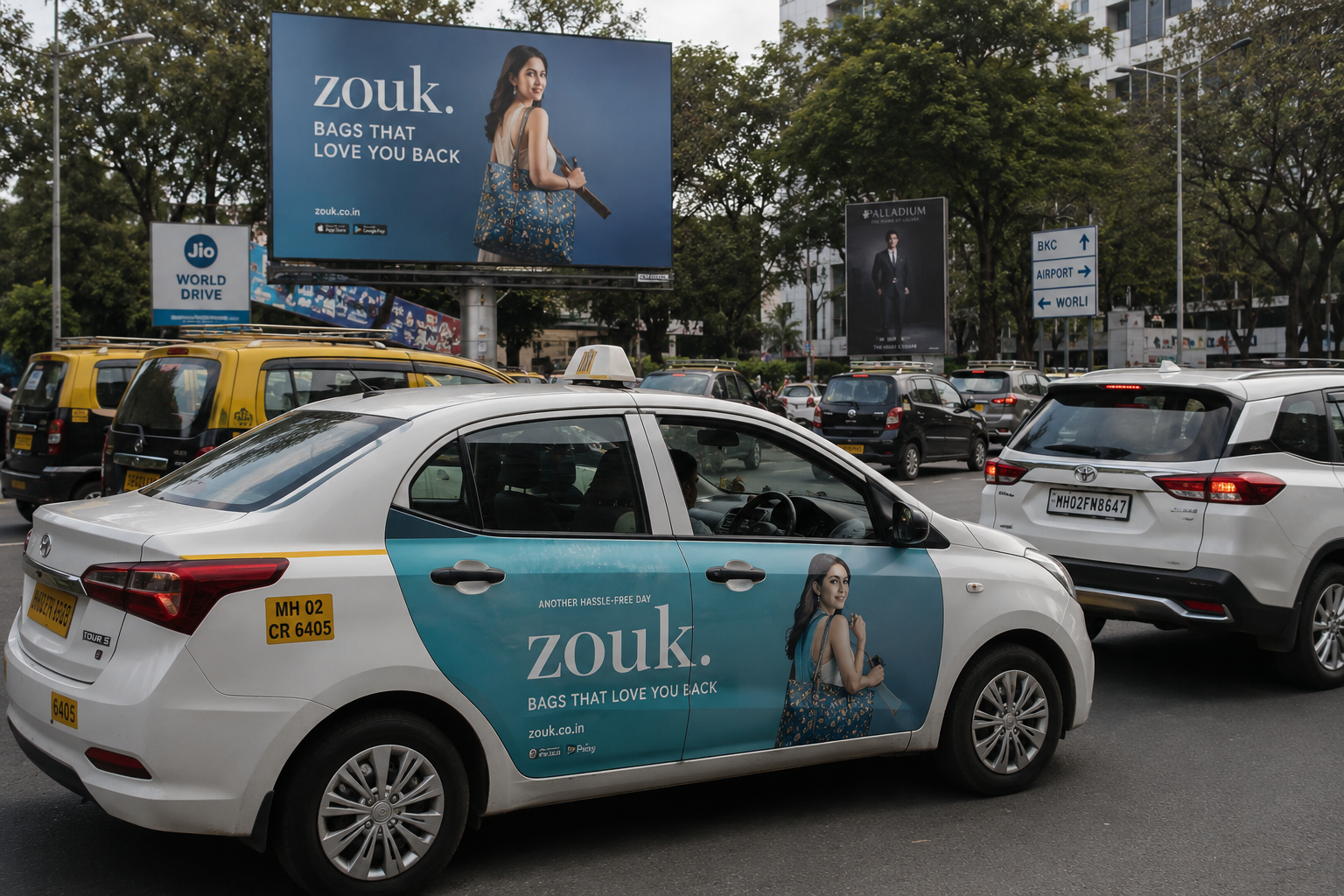
Advertising is increasingly surrounded by digital screens, social feeds, targeted banners, and online promotions. These formats can be highly effective, but they exist largely within a digital environment.
Car and cab branding offers something different.
A branded vehicle physically operates within the same streets as the audience. Consumers can see it while waiting at traffic signals, walking along a road, travelling to work, shopping, or sitting in another vehicle.The brand is not simply appearing on a screen. It is physically present in the consumer’s everyday environment.
This creates what can be called the Street-Level Proof Effect.
Why Movement Changes the Advertising Experience
A fixed billboard occupies one location. A branded cab can occupy hundreds of locations during its operating cycle. That movement creates unpredictability and variety in exposure.
A consumer might see a branded cab near a residential area in the morning and encounter another branded vehicle near a commercial district later in the day. Someone else may see the same campaign outside a mall or near an airport. Each encounter happens naturally within the rhythm of city life.
The moving asset therefore becomes part of the street environment rather than simply being positioned beside it.
Making Brand Presence Feel Tangible
Consumers often distinguish between advertising that feels distant and advertising that feels connected to their surroundings.
A branded cab can bridge that gap.
When a vehicle carrying a brand message moves through familiar roads, the campaign becomes easier to place within everyday reality. The consumer can physically observe the asset moving, stopping, turning, and travelling through the city.That tangible presence can contribute to a stronger perception of brand activity.
The message effectively says:
“This brand is here, in the same city and environment as you.”
The Power of Repeated Street Encounters
One of the strongest advantages of cab branding is the potential for repeated encounters.A single branded vehicle can travel through multiple routes during the day. When a fleet operates together, the number of possible street-level encounters increases significantly.
Consumers may begin recognizing the vehicle design, colours, product visuals, or campaign identity.Importantly, these encounters do not require consumers to deliberately engage with the advertisement. The campaign reaches them as part of their normal movement through the city.