
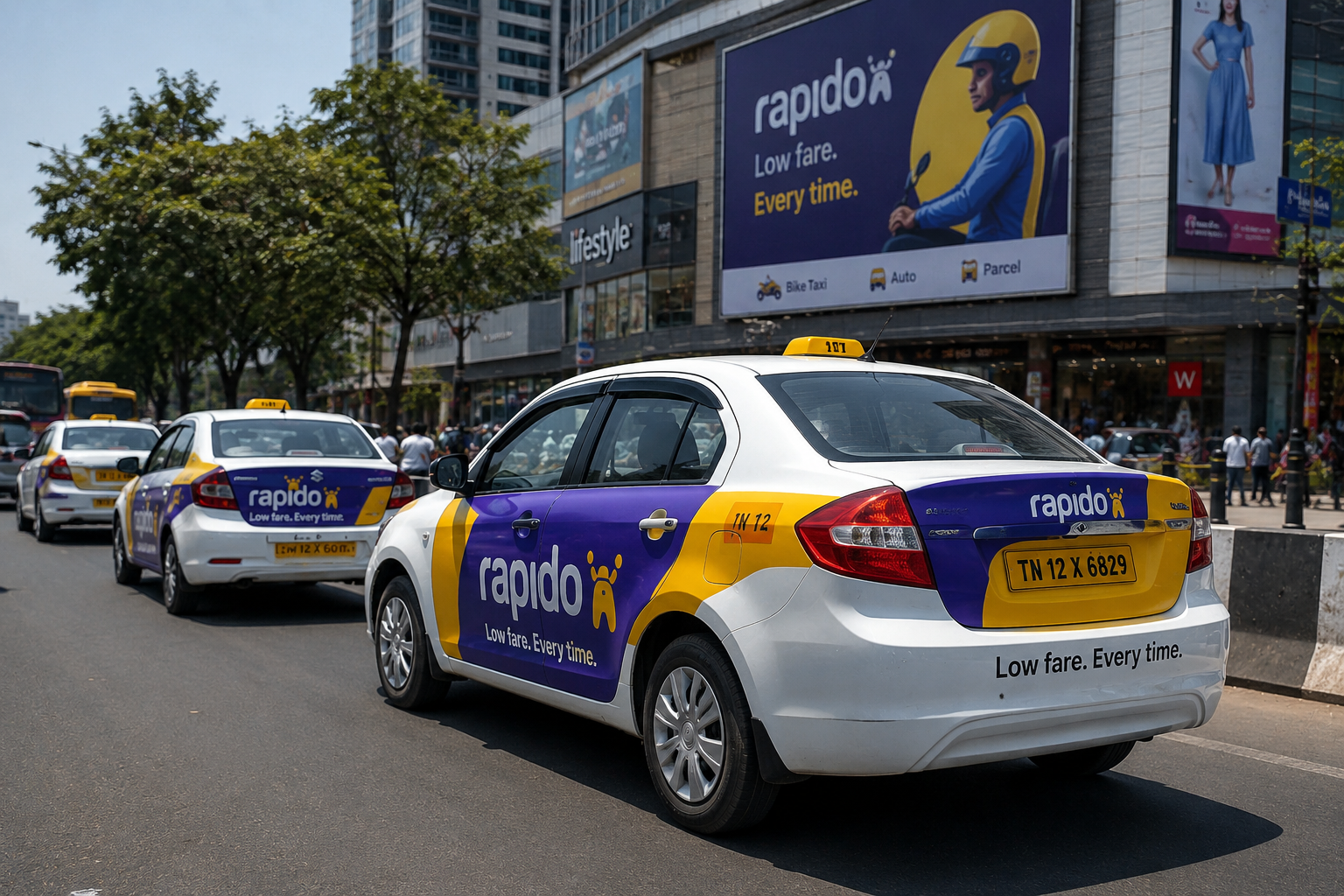
Traffic signals create natural pauses in a city’s daily movement, giving consumers a few additional seconds to notice the vehicles around them. A branded cab can use these moments to bring a brand message directly into the consumer’s visual environment. As the same cab moves through multiple junctions and city routes, it can generate repeated exposure across different audiences. The Traffic-Light Recall Effect explores how these short but frequent encounters can contribute to stronger brand familiarity.
The Traffic-Light Recall Effect: How Cab Branding Builds Repeated Brand Exposure During Everyday City Stops
Turning Traffic Stops Into Brand Touchpoints
Urban traffic is filled with brief moments when movement slows down. Traffic signals, junctions, crossings and congested stretches can create natural pauses where drivers, passengers, pedestrians and nearby commuters have time to observe their surroundings.
For a branded cab, these moments can become valuable visibility opportunities. Instead of remaining at a fixed location, the vehicle moves from one traffic point to another, taking the brand message with it.
Why Short Exposures Can Matter
Cab branding does not depend on consumers spending several minutes looking at an advertisement. The creative needs to communicate its identity quickly through recognisable colours, strong visuals, product imagery and simple messaging.
A branded vehicle seen repeatedly during everyday travel can gradually become familiar. The consumer may notice the same campaign at one junction in the morning and encounter another branded cab later in a different part of the city.

Creating Visibility Across Busy Junctions
Traffic-light environments are particularly useful because they bring multiple audiences into the same physical space. Drivers waiting at signals, pedestrians crossing roads, passengers inside other vehicles and people standing near shops can all potentially see a branded cab.
Strategic deployment across important junctions and high-traffic corridors can therefore add another layer of visibility to a broader OOH campaign.
Designing Cab Creative for Quick Recognition
The creative on a cab needs to work within a limited attention window. Large brand identifiers, simple headlines, clear product imagery and strong visual hierarchy can make the message easier to recognise.
Different parts of the vehicle can also serve different communication purposes. Side panels can carry the main visual, while the rear can focus on brand recall or a short call-to-action.
From Traffic Moments to Brand Recall
The Traffic-Light Recall Effect highlights the value of repeated everyday exposure. A single branded cab may be noticed briefly, but a campaign using multiple vehicles across busy routes can create a wider network of moving brand touchpoints.
When cab branding is planned alongside fixed hoardings, DOOH, retail media or other OOH formats, these short traffic-stop encounters can reinforce the overall campaign message. The result is an outdoor presence that moves with the city while remaining visible during some of its most natural moments of pause.