







Beyond the Billboard: How Mall Branding Is Turning Shopping Spaces into Brand Worlds??
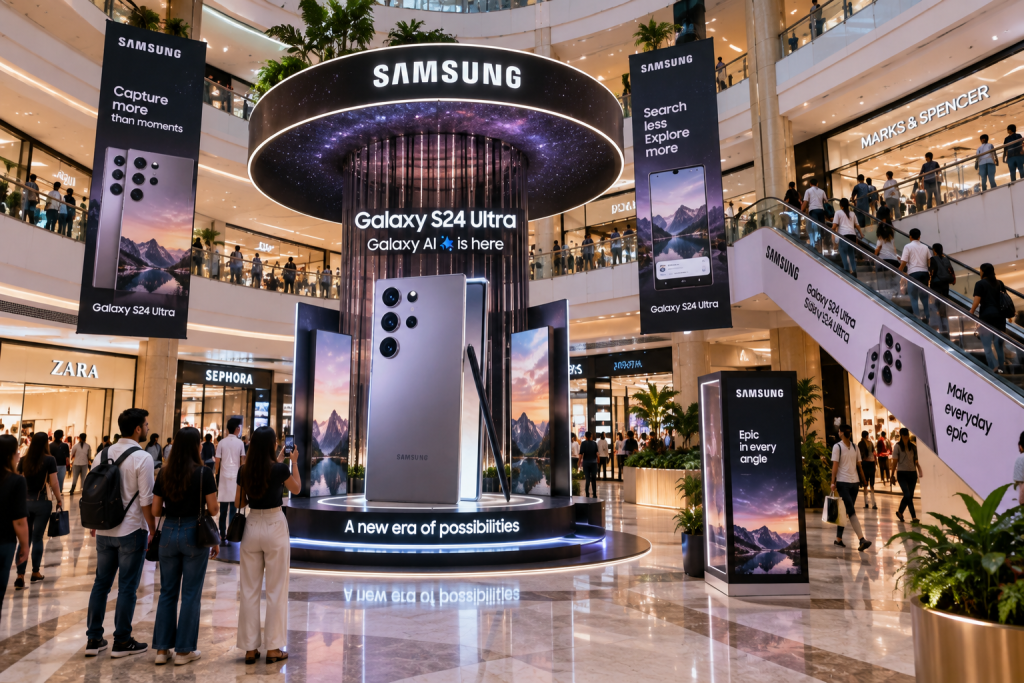
A shopper entering a mall isn’t necessarily looking for advertising. They are looking for a product, a restaurant, an experience, a meeting place or simply something new to discover. Yet some of the most effective OOH campaigns manage to capture their attention without feeling like traditional advertising.
The reason is simple: they transform the environment itself.
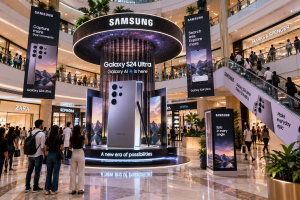
Modern mall branding is moving beyond individual posters and banners to create immersive brand worlds that surround consumers throughout their shopping journey. Entrances, atriums, escalators, pillars, digital displays and experiential spaces can work together to make a brand impossible to ignore—and difficult to forget.
When the Mall Becomes the Canvas
A shopping mall provides something traditional outdoor media cannot always offer: multiple connected touchpoints within one environment.
A campaign can begin the moment a consumer enters through a branded gateway, continue across escalators and corridors, and culminate in an impressive atrium installation or interactive experience.
Each touchpoint can carry the same creative idea while performing a different role.
The result is not simply a collection of advertisements. It is a single brand story unfolding across a physical space.

From Visibility to Immersion
The difference between conventional advertising and innovative mall branding lies in how consumers experience the campaign.
A banner is something a shopper sees.
An immersive installation is something a shopper experiences.
That distinction can dramatically change the relationship between audience and brand. Large-scale creative executions can become visual landmarks, while interactive elements can encourage consumers to stop, explore, photograph and share.
The campaign becomes part of the environment rather than an interruption within it.
The Shopper Journey Is the Media Plan
Every mall has natural patterns of movement. Consumers enter through specific gateways, gather around atriums, pause near food courts, travel between floors and spend more time in certain high-dwell areas.
Smart mall campaigns use these behavioural patterns to build a communication journey.
The entrance can create awareness.
The corridor can reinforce the message.
The atrium can deliver spectacle.
An interactive zone can generate engagement.
A retail touchpoint can encourage action.
This approach turns the shopper journey itself into a media strategy.
Where Experience Meets Purchase Intent
Mall environments also offer an important advantage: proximity to consumption.
Consumers are already browsing brands, comparing products, dining, entertaining themselves and making purchase decisions. A strategically designed OOH experience can therefore influence consumers closer to the point where consideration becomes action.
For brands, this creates an opportunity to connect attention, experience and commerce within the same physical environment.